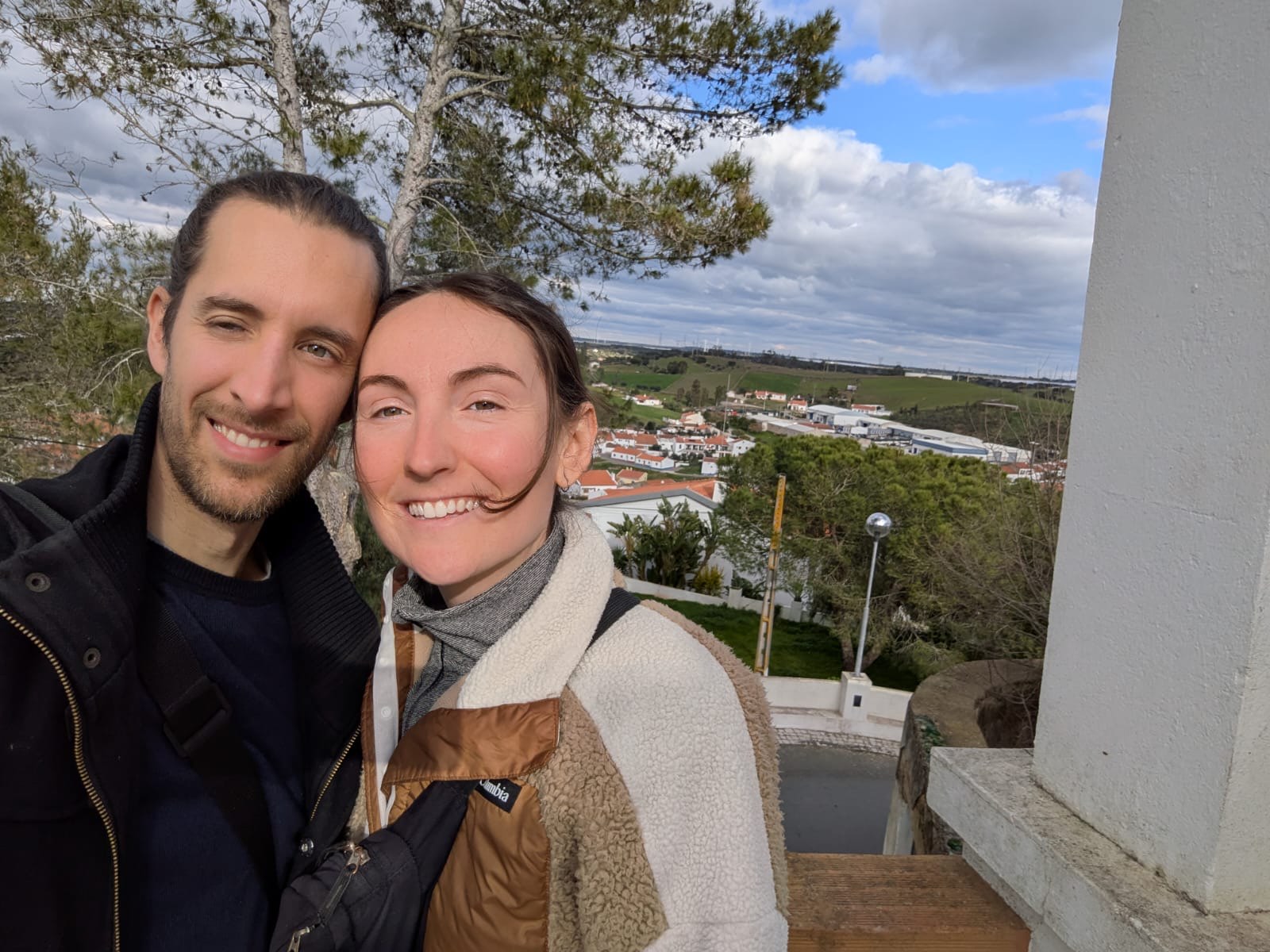
We arrived at Four Trees with two backpacks, no real plan past "stay a few weeks," and a wildly overestimated idea of how much we knew about growing food. Four Trees is a small permaculture retreat center terraced into a hillside in central Portugal — cork oaks, swimming ponds, a communal kitchen that never really closes, and rows of vegetable beds that somehow feed twenty people a day out of what looks, from the road, like a scrubby hillside.
The "few weeks" turned into three months.
Mornings on the terraces
Every day started the same way: coffee on the veranda while the mist was still sitting in the valley, then out to the terraces before the heat became a real consideration. Portugal in summer doesn't negotiate — by eleven the light goes flat and white and everyone with any sense is somewhere shaded. So the real work happened early, and it was almost always the same: weeding, mulching, moving irrigation lines, harvesting whatever the kitchen needed that day.
What surprised us wasn't the labor, it was the design. Four Trees runs on permaculture principles — every terrace does more than one job. A bed of beans shades the lettuce planted underneath it. A swale catches rain that would otherwise run straight off the hillside and feeds it slowly into the root zone of a young almond tree. Nothing is just one thing. We'd read about permaculture before we arrived and nodded along the way you nod along to any good idea that hasn't cost you anything yet. Standing in the terraces, watching a system actually hold water and shade and nitrogen in balance, was a different kind of understanding.
You don't really learn a garden from a book. You learn it by weeding the wrong thing once and getting quietly corrected.
The kitchen was the real classroom
If the terraces taught us how to grow food, the kitchen taught us what to do with it. Meals at Four Trees are communal — big pots, long tables, whoever's on kitchen duty that day cooking almost entirely from what came out of the ground that morning. We learned to cook without a plan, which was uncomfortable at first for two people used to recipes with exact measurements, and then became the only way we wanted to cook.
Chris ended up quietly rebuilding Four Trees' beat-up old website in the evenings, trading a few hours of laptop time for an extra day at the retreat when our visas got complicated. It became a pattern we'd repeat later, at other places — showing up with whatever skills we had and trading them for time and a place at the table.
What stayed with us
We left Four Trees with sunburned necks, a much better sense of how to actually run a garden instead of just liking the idea of one, and a friendship with the couple who founded the place that we still keep up years later. It's also where the two of us first talked seriously about what a life built around growing our own food might actually look like — not as a retreat, but as an actual, ordinary week.
We didn't have the answer yet. But Four Trees is where the question first felt real instead of aspirational.